
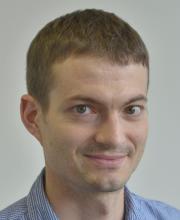
Prof. Dr. Florian Heyd
Freie Universität Berlin
Institut für Chemie und Biochemie
Takustr. 6
14195 Berlin
Phone: +49 (30) 838 62938
Fax: +49 (30) 838 56919
E-Mail: florian.heyd@fu-berlin.de
Research Area
Biochemistry
Position and Status
Professor of RNA Biochemistry (W3)
Scholarships and awards
2019, 2021, 2022 Award for Good Teaching (by the University’s association of Biochemistry students)
2015 - ‘Award for good teaching’ by the association of biochemistry students
2011 - 2016 - Emmy-Noether-Fellowship by the DFG
2008 - 2011 - DFG Research fellowship
2006 - Promotion ‘summa cum laude’
2004 - 2005 - Scholarship of the ‘Studienstiftung des deutschen Volkes’ (Doktorandenförderung)
2000 - 2002 - Scholarship of the ‘Studienstiftung des deutschen Volkes’ (Grundförderung)
University training and degree
10/1997 - 05/2002 - Biochemistry (Diplom), FU Berlin and University of Cambridge (England), Diploma thesis supervised by J.K. Sethi (Cambridge)
Advanced academic qualifikations
04/2006 - Dr. rer. nat. (Cell biology), University of Essen, 2006, supervised by T. Möröy
Postgraduate professional career
Since 2019 - Dean of research, Department of Biology, Chemistry, Pharmacy, FU Berlin
2018 - Offer for full professor of Biochemistry (W3) from the University of Wuerzburg (declined)
10/2013 - present - Professor of RNA Biochemistry, FU Berlin (first W2, since 10/2019 W3)
04/2011 - 09/2013 - Leader of the independent Emmy-Noether-Group ‘Functional consequences of alternative splicing in T cells’, Philipps University Marburg
04/2008 - 03/2011 - Postdoctoral fellow, UTSW, Dallas and UPenn, Philadelphia, K. Lynch
05/2006 - 03/2008 - Postdoctoral fellow, IRCM, Montreal, T. Möröy
2017 – present Chair of the examination board Bachelor Biochemistry
2015 – present Member of the animal protection committee
2015 – present Member of the committee to award the best (University-wide) PhD theses
2014 – present Member of the examination board and steering committee Bioinformatics
2019 – 2022 Dean of research, Department of Biology, Chemistry, Pharmacy, FU Berlin
2017 – 2022 Co-initiator and coordinator of a graduate exchange program between
SUSTech (Shenzhen, China) and FU Berlin
2019 – 2021 Member of the Meetings Committee of the RNA Society (2019-2021)
Most important publications
- Preußner, M., Smith, H. L., Hughes, D., Zhang, M., Emmerichs, A.-K., Scalzitti, S., Peretti, D., Swinden, D., Neumann, A., Haltenhof, T., Mallucci, G. R. & Heyd, F. ASO targeting RBM3 temperature-controlled poison exon splicing prevents neurodegeneration in vivo. EMBO Molecular Medicine 15, e17157 (2023). https://doi.org/10.15252/emmm.202217157
- Dybkov, O., Preußner, M., El Ayoubi, L., Feng, V.-Y., Harnisch, C., Merz, K., Leupold, P., Yudichev, P., Agafonov, D. E., Will, C. L., Girard, C., Dienemann, C., Urlaub, H., Kastner, B., Heyd, F. & Lührmann, R. Regulation of 3′ splice site selection after step 1 of splicing by spliceosomal C* proteins. Science Advances 9, eadf1785 (2023). DOI: 10.1126/sciadv.adf1785
- Los, B., Preußner, M., Eschke, K., Vidal, R. M., Abdelgawad, A., Olofsson, D., Keiper, S., Paulo-Pedro, M., Grindel, A., Meinke, S., Trimpert, J. & Heyd, F. Body temperature variation controls pre-mRNA processing and transcription of antiviral genes and SARS-CoV-2 replication. Nucleic Acids Research 50, 6769-6785 (2022). https://doi.org/10.1093/nar/gkac513
- Meinke, S., Goldammer, G., Weber, A. I., Tarabykin, V., Neumann, A., Preussner, M. & Heyd, F. Srsf10 and the minor spliceosome control tissue-specific and dynamic SR protein expression. eLife 9, e56075 (2020). https://doi.org/10.7554/eLife.56075
- Neumann, A., Meinke, S., Goldammer, G., Strauch, M., Schubert, D., Timmermann, B., Heyd, F. & Preußner, M. Alternative splicing coupled mRNA decay shapes the temperature- dependent transcriptome. EMBO reports 21, e51369 (2020). https://doi.org/10.15252/embr.202051369
- Preussner, M., Gao, Q., Morrison, E., Herdt, O., Finkernagel, F., Schumann, M., Krause, E., Freund, C., Chen, W. & Heyd, F. Splicing-accessible coding 3′UTRs control protein stability and interaction networks. Genome Biology 21, 186 (2020). https://doi.org/10.1186/s13059- 020-02102-3
-
Haltenhof, T., Kotte, A., De Bortoli, F., Schiefer, S., Meinke, S., Emmerichs, A.-K., Petermann, K. K., Timmermann, B., Imhof, P., Franz, A., Loll, B., Wahl, M. C., Preußner, M. & Heyd, F. A Conserved Kinase-Based Body-Temperature Sensor Globally Controls Alternative Splicing and Gene Expression. Molecular Cell 78, 57-69.e54 (2020). DOI: 10.1016/j.molcel.2020.01.028
8 Neumann, A., Schindler, M., Olofsson, D., Wilhelmi, I., Schürmann, A. & Heyd, F. Genome- wide identification of alternative splicing events that regulate protein transport across the secretory pathway. Journal of Cell Science 132 (2019). https://doi.org/10.1242/jcs.230201
9 Preußner, M., Goldammer, G., Neumann, A., Haltenhof, T., Rautenstrauch, P., Müller- McNicoll, M. & Heyd, F. Body Temperature Cycles Control Rhythmic Alternative Splicing in Mammals. Molecular Cell 67, 433-446.e434 (2017). DOI: 10.1016/j.molcel.2017.06.006
10 Wilhelmi, I., Kanski, R., Neumann, A., Herdt, O., Hoff, F., Jacob, R., Preußner, M. & Heyd, F. Sec16 alternative splicing dynamically controls COPII transport efficiency. Nature Communications 7, 12347 (2016). https://doi.org/10.1038/ncomms12347
* Co-corresponding authors