
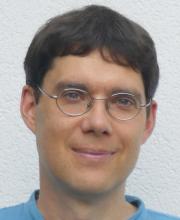
Prof. Dr. Sebastian Schuck
Zentrum für Molekulare Biologie der Universität Heidelberg (ZMBH)
Im Neuenheimer Feld 282
69120 Heidelberg
Phone: +49 (6221) 544749
E-mail: s.schuck@zmbh.uni-heidelberg.de
Research Area
Biochemistry and Molecular Cell Biology
Position and Status
Professor W3
Scholarships and awards
2021 - Call for Associate Professorship, Medical Faculty, University of Oslo (declined)
2007 - 2010 - Postdoctoral fellowship from the Human Frontier Science Program
2006 - 2007 - Postdoctoral fellowship from the Ernst Schering Foundation
1995 - 2000 - Scholarship Studienstiftung des Deutschen Volkes
University training and degree
03/2000 - 11/2000 - Diploma thesis with Alfred Nordheim at University of Tübingen
09/1997 - 11/2000 - Study of Biochemistry at University of Tübingen
09/1995 - 06/1997 - Study of Biochemistry at University of Hannover
Advanced academic qualifications
2004 - PhD (Dr. rer. nat.) in Biology, Technical University Dresden, Max Planck Institute of Molecular Cell Biology and Genetics, Dresden, Supervisor: Kai Simons
Postgraduate professional career
2021 - present - Professor of Biochemistry and Molecular Cell Biology, Heidelberg University Biochemistry Center
07/2013 - 2021 - Independent group leader at Heidelberg University, Center for Molecular Biology
09/2006 - 06/2013 - Postdoctoral fellow with Peter Walter at the University of California, San Francisco, USA
01/2005 - 08/2006 - Postdoctoral fellow with Kai Simons at the Max Planck Institute of Molecular Cell Biology and Genetics, Dresden
2023 – present Steering committee member, CellNetworks Core Technology Platform, Heidelberg University
2021 – present Teaching in the undergraduate program Medicine, Faculty of Medicine, Heidelberg University
2013 – present Teaching in the Master's program Molecular Biosciences, Faculty of Biosciences, Heidelberg University
2013 – present Reviewer for grant agencies (Deutsche Forschungsgemeinschaft, ERC, Research Foundation Flanders, Boehringer Ingelheim Foundation)
2013 – present Reviewer for scientific journals (including Autophagy, Cell Research, Current Genetics, eLife, FEBS Letters, Journal of Biological Chemistry, Journal of Cell Science, Journal of Molecular Biology, Nature, Nature Cell Biology, Nature Communications, PNAS and Science Advances)
2014 – 2022 Teaching in the Bachelor's program Biosciences, Faculty of Biosciences, Heidelberg University
2020 – 2021 Doctoral graduation committee (Promotionsausschuss), Faculty of Biosciences, Heidelberg University
2015 – 2019 Steering committee member, Cluster of Excellence CellNetworks, Heidelberg University
2013 – 2019 Member Cluster of Excellence CellNetworks, Heidelberg University
Most important publications
-
Papagiannidis, D., Bircham, P. W., Lüchtenborg, C., Pajonk, O., Ruffini, G., Brügger, B. & Schuck, S. Ice2 promotes ER membrane biogenesis in yeast by inhibiting the conserved lipin phosphatase complex. The EMBO Journal 40, e107958 (2021). https://doi.org/10.15252/embj.2021107958
-
2 Schäfer, J. A., Schessner, J. P., Bircham, P. W., Tsuji, T., Funaya, C., Pajonk, O., Schaeff, K., Ruffini, G., Papagiannidis, D., Knop, M., Fujimoto, T. & Schuck, S. ESCRT machinery mediates selective microautophagy of endoplasmic reticulum in yeast. The EMBO Journal 39, e102586 (2020). https://doi.org/10.15252/embj.2019102586
3 Schmidt, R. M., Schessner, J. P., Borner, G. H. H. & Schuck, S. The proteasome biogenesis regulator Rpn4 cooperates with the unfolded protein response to promote ER stress resistance. eLife 8, e43244 (2019). https://doi.org/10.7554/eLife.43244
4 Szoradi, T., Schaeff, K., Garcia-Rivera, E. M., Itzhak, D. N., Schmidt, R. M., Bircham, P. W., Leiss, K., Diaz-Miyar, J., Chen, V. K., Muzzey, D., Borner, G. H. H. & Schuck, S. SHRED Is a Regulatory Cascade that Reprograms Ubr1 Substrate Specificity for Enhanced Protein Quality Control during Stress. Molecular Cell 70, 1025-1037.e1025 (2018). https://doi.org/10.1016/j.molcel.2018.04.027
5 Schuck, S., Gallagher, C. M. & Walter, P. ER-phagy mediates selective degradation of endoplasmic reticulum independently of the core autophagy machinery. Journal of Cell Science 127, 4078-4088 (2014). https://doi.org/10.1242/jcs.154716
6 Moreira, K. E., Schuck, S., Schrul, B., Fröhlich, F., Moseley, J. B., Walther, T. C. & Walter, P. Seg1 controls eisosome assembly and shape. Journal of Cell Biology 198, 405-420 (2012). https://doi.org/10.1083/jcb.201202097
7 Schuck, S., Prinz, W. A., Thorn, K. S., Voss, C. & Walter, P. Membrane expansion alleviates endoplasmic reticulum stress independently of the unfolded protein response. Journal of Cell Biology 187, 525-536 (2009). https://doi.org/10.1083/jcb.200907074
8 Schuck, S., Gerl, M. J., Ang, A., Manninen, A., Keller, P., Mellman, I. & Simons, K. Rab10 is Involved in Basolateral Transport in Polarized Madin–Darby Canine Kidney Cells. Traffic 8, 47-60 (2007). https://doi.org:https://doi.org/10.1111/j.1600 -0854.2006.00506.x
9 Schuck, S., Manninen, A., Honsho, M., Füllekrug, J. & Simons, K. Generation of single and double knockdowns in polarized epithelial cells by retrovirus-mediated RNA interference. Proceedings of the National Academy of Sciences 101, 4912-4917 (2004). https://doi.org/10.1073/pnas.0401285101
10 Schuck, S., Honsho, M., Ekroos, K., Shevchenko, A. & Simons, K. Resistance of cell membranes to different detergents. Proceedings of the National Ac ademy of Sciences 100, 5795-5800 (2003). https://doi.org/10.1073/pnas.0631579100